
How it Works
Students Solve Problems Naturally
Pen and paper–just like it’s always done in class.
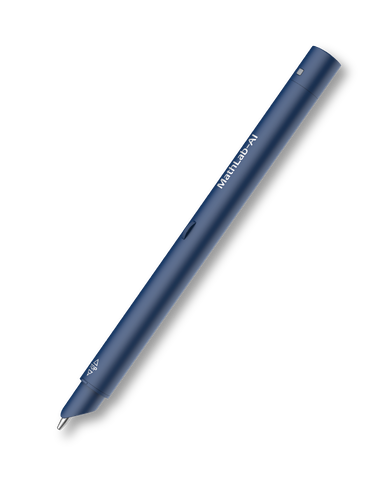
Students complete math problems using a smart pen and patterned paper that can be printed using a standard laser printer or purchased. There is no typing, no artificial interface, and no disruption to instruction. Students write, draw, and revise exactly as they would on any worksheet or assessment.
This approach matters because mathematical understanding lives in the work itself. The order of steps, the timing, the corrections, and the strategies all tell a story that traditional assessments never capture.
Effortless Data Upload
Dock the pen. Upload the learning.
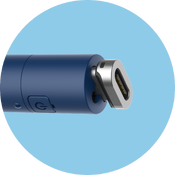
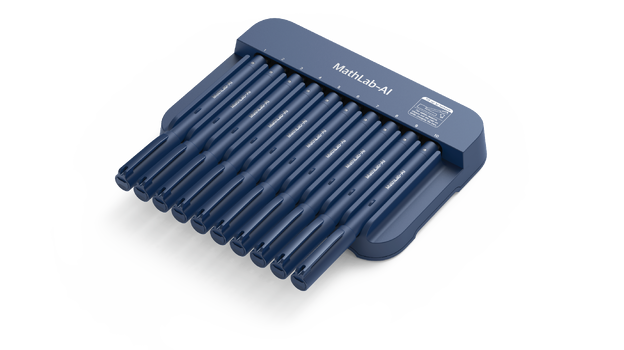
When the assessment is complete, the teacher places the pen into a simple docking cradle and securely uploads the student’s work.
At this moment, handwritten strokes are converted into precise, vectorized data, preserving not only what the student answered, but how they arrived there, step by step.
From the classroom perspective, this process takes seconds. From a data perspective, it unlocks a depth of insight that was previously impossible at scale.


Learning Within the Zone of Proximal Development
Personalized learning that sustains motivation and drives growth.
Using its analysis of student thinking, KAIT continuously aligns content to each learner’s Zone of Proximal Development, the space where challenge is productive, learning is achievable, and motivation is sustained.
When learning consistently operates within a student’s ZPD, effort feels purposeful rather than discouraging. Tasks are complex enough to promote persistence and curiosity, yet accessible enough to build confidence and momentum. This balance is essential to maintaining motivation, particularly in mathematics, where repeated failure or unnecessary repetition can quickly disengage learners.
The Zone of Proximal Development represents the range of tasks a student can successfully engage with when the challenge level is just right—not too easy, not too difficult.
MathLab-AI uses real-time analysis of student thinking to keep learning activities within this optimal zone.
Too Easy
Tasks feel repetitive and disengaging, offering little opportunity for growth.
Zone of Proximal
Development
Tasks are appropriately challenging, encouraging persistence, curiosity, and meaningful learning.
Too Hard
Tasks become discouraging, increasing frustration and disengagement.
How Math Lab-Al Sustains Learning Within the ZPD
Math Lab-Al doesn't treat learning as a one-time event. Instead, it continuously adapts instruction through a cycle that reinforces motivation, confidence, and long-term growth.